I recently attended the Museu d’Història de la Ciutat in Barcelona. It was a beautiful museum consisting of the ancient Roman ruins of the original city Barcino.
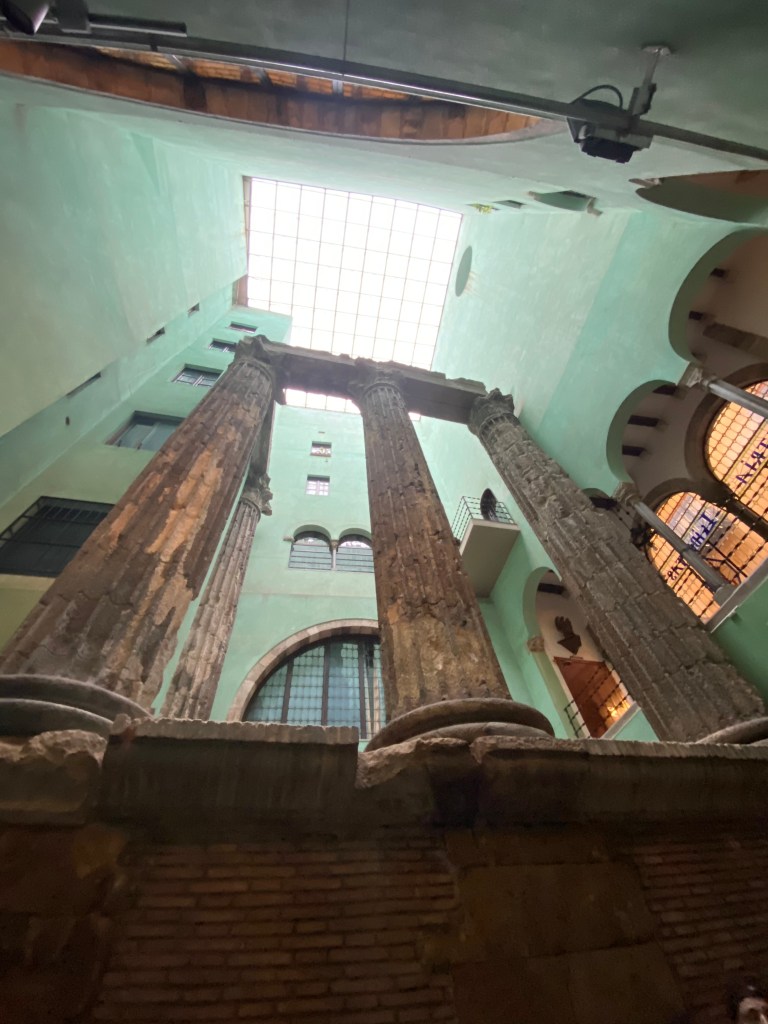
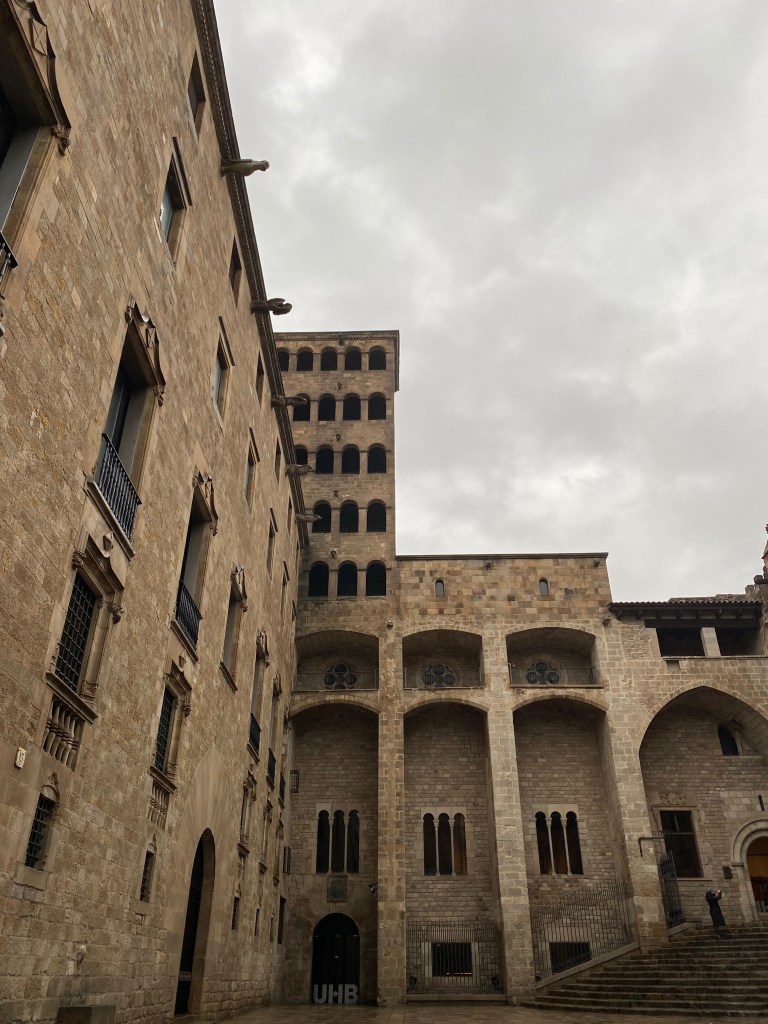
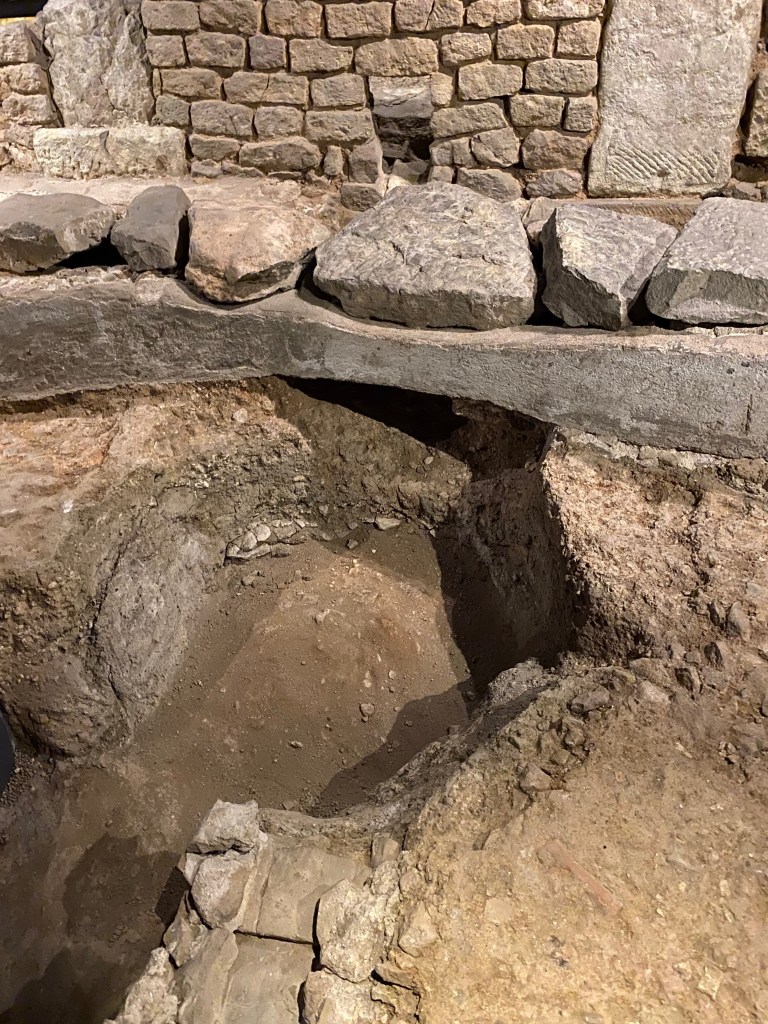
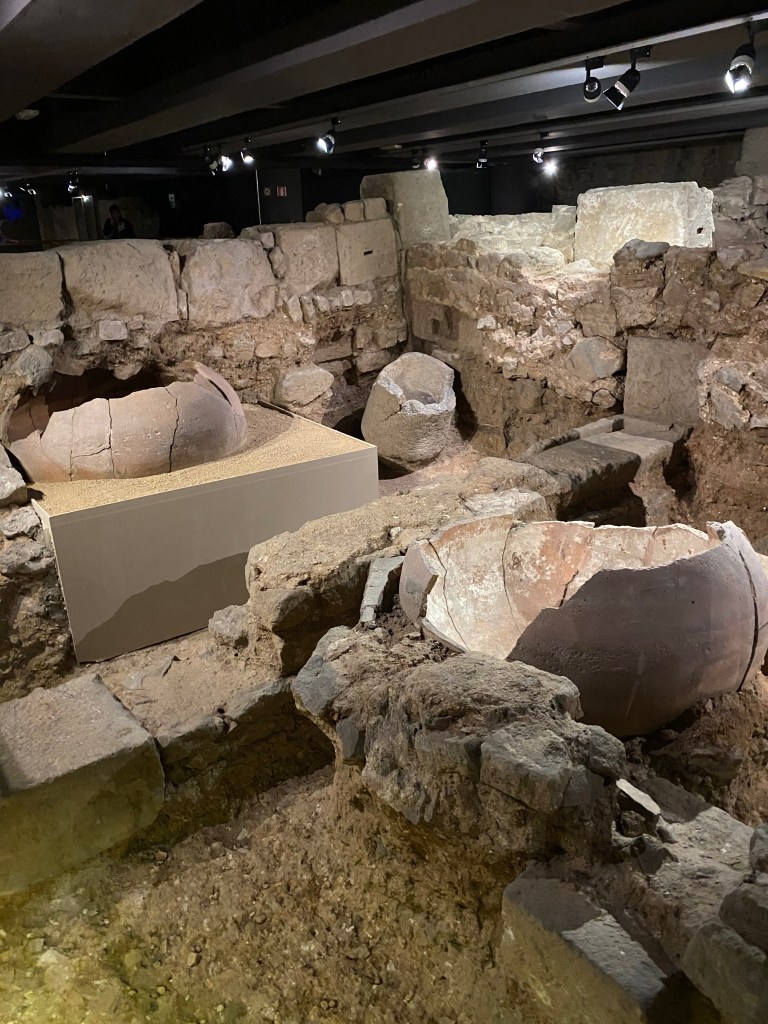
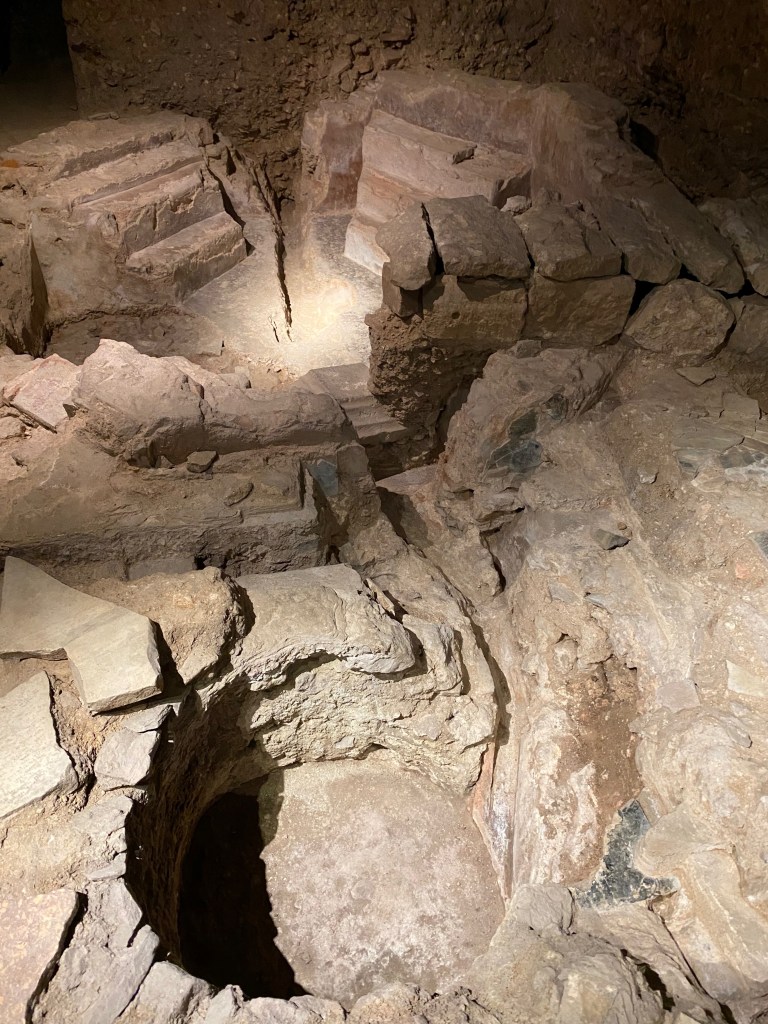
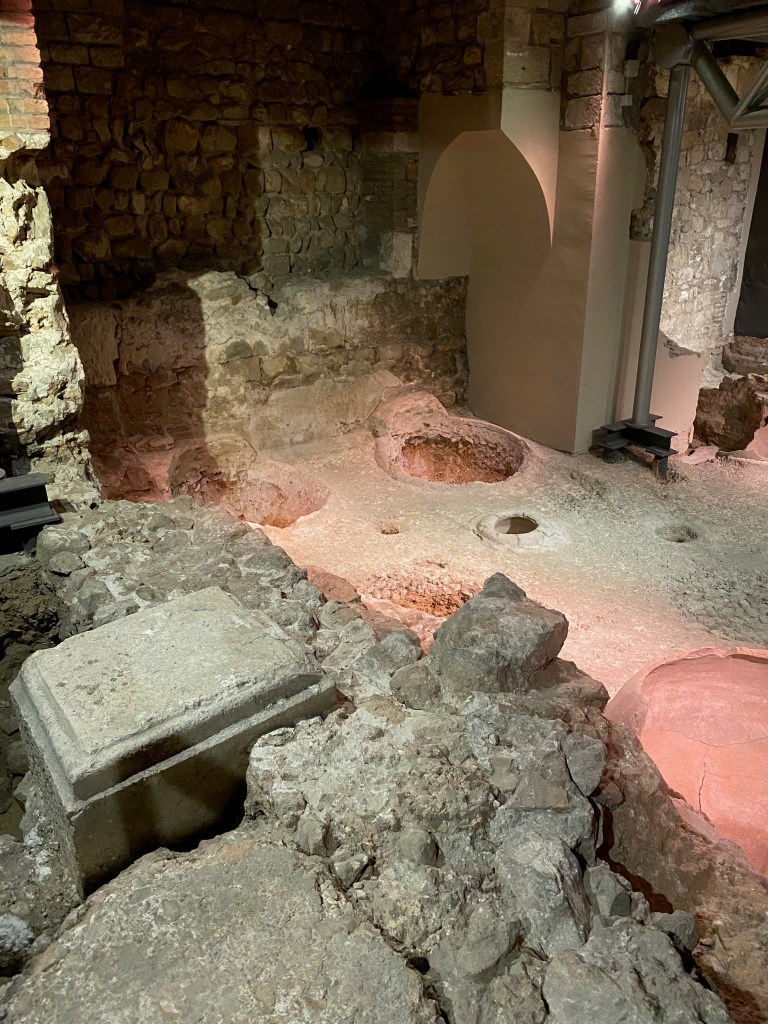
I took pictures of Roman Monumental influence and its engineering capacity in Barcelona. Within my photos includes, the three original Roman towers that are located in the Gothic Quarter, the outside of the museum showing medieval and Roman style presence and arches, part of the Roman sewage system which was the first of its kind, stone vats where wine was fermented, and what was considered a human bath. In my opinion, obviously Catalan buildings today look different. When comparing modern Catalan to Roman architecture, I think Roman structures were much more practical and advanced for that time period. In ancient times the city was completely surrounded by a stone-wall for protection and the majority of the city was made from stone along with very circular bases like the rounded Roman arches. The Romans were noted for their prestigious architecture abilities. All Roman cities were advancely built for that time period — such as the Roman city of Barcelona, between the city-wall, aqueducts, bridges, homes, and their sewage system. The main function of Roman structure was to help the people of their time simply function. It is apparent that design and colors of Roman structures were not as significant as they are now in Catalonia. In Catalan buildings today you see architecture with different shapes, colors, and made from different materials. For example, Gaudi’s architecture. Many Catalan buildings have kept the Roman influence within homes and buildings. There is a nice mix between the two. Within the Gothic Quarter buildings, you will see a strong Roman prensence and as you make your way further out of the city center you will see more of a modern presence.
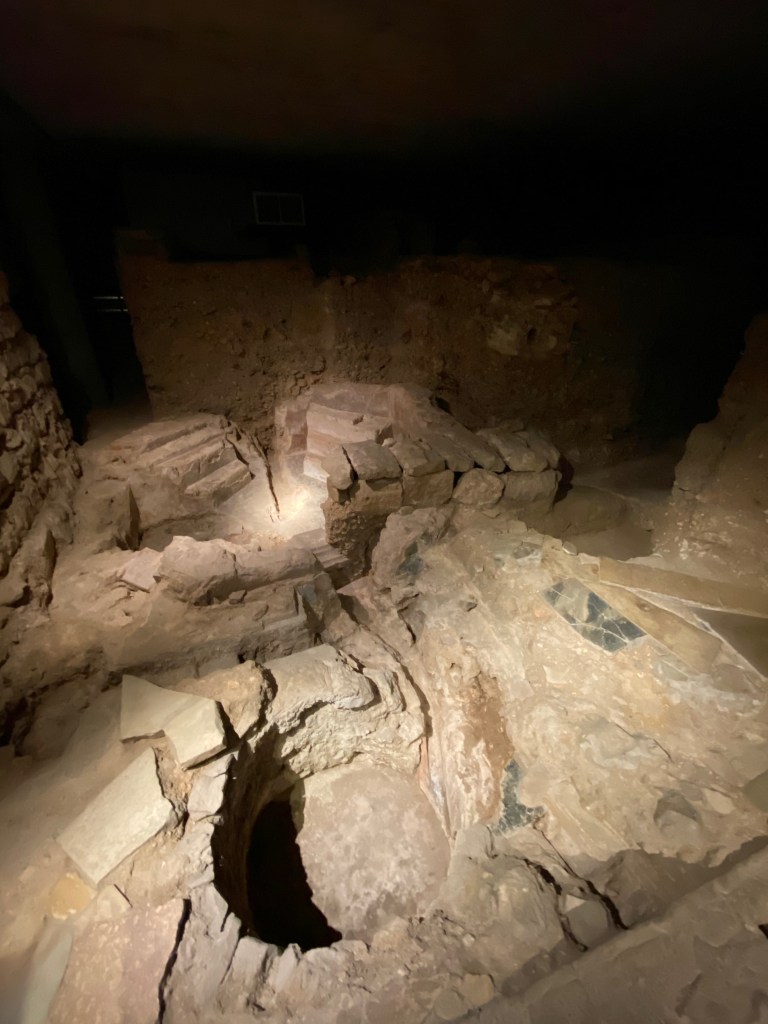
These three images are Roman religious artifacts and represent religious life. Two of the images are where Roman baptisms were practiced. The other photo is of Roman candles and candle holders which were primarily used during prayer and were very spiritual. Romans orginially followed Polytheism which was a mixed religion of Paganism and practices from the ancient Greeks. Polytheism is a belief and worship of more than one god. After Jesus Christ was born, (Anno Domini), many of his followers converted to Christiantity, and ultimately the Roman Empire completely adopted it as their primary religion. Christianity really is one of the most important influences within Roman times. There was a large transition from Polytheism to Monotheism in the early beginning of the Roman Empire, but with more time it was the center religion of all Roman cities including Barcino.
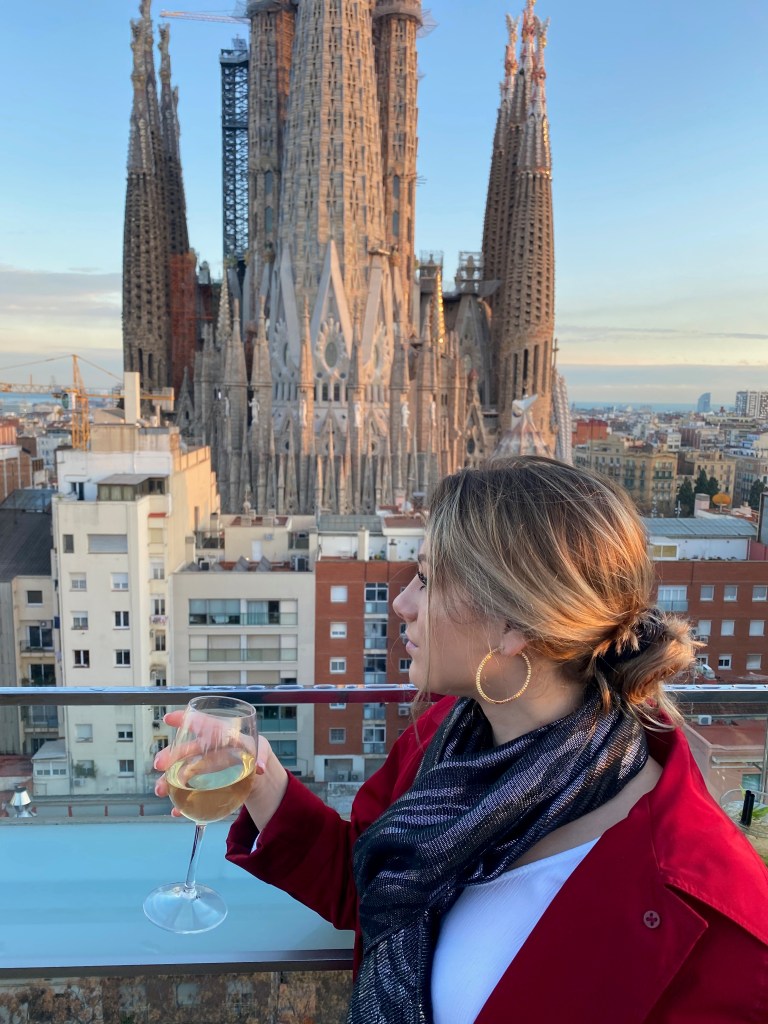
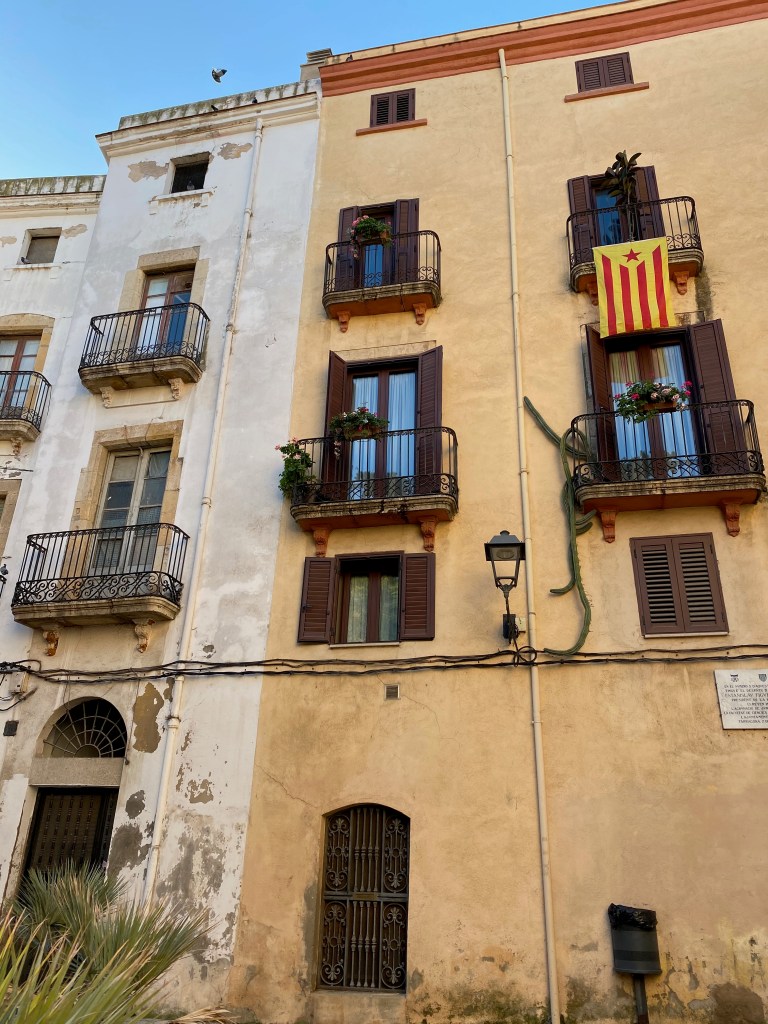
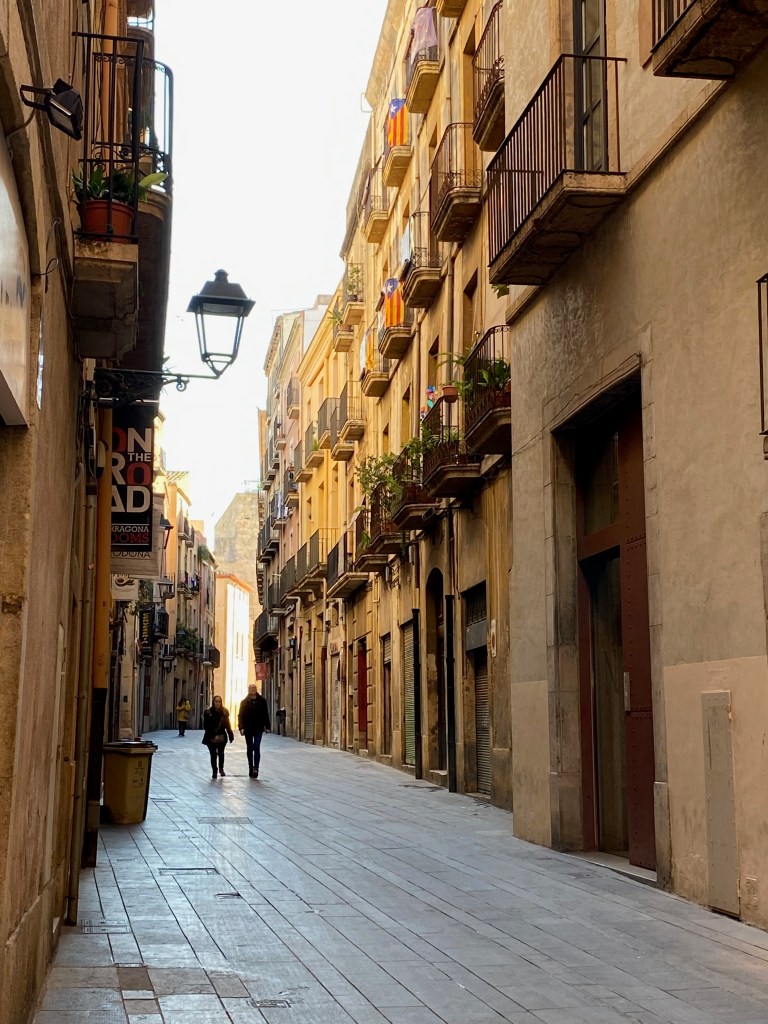
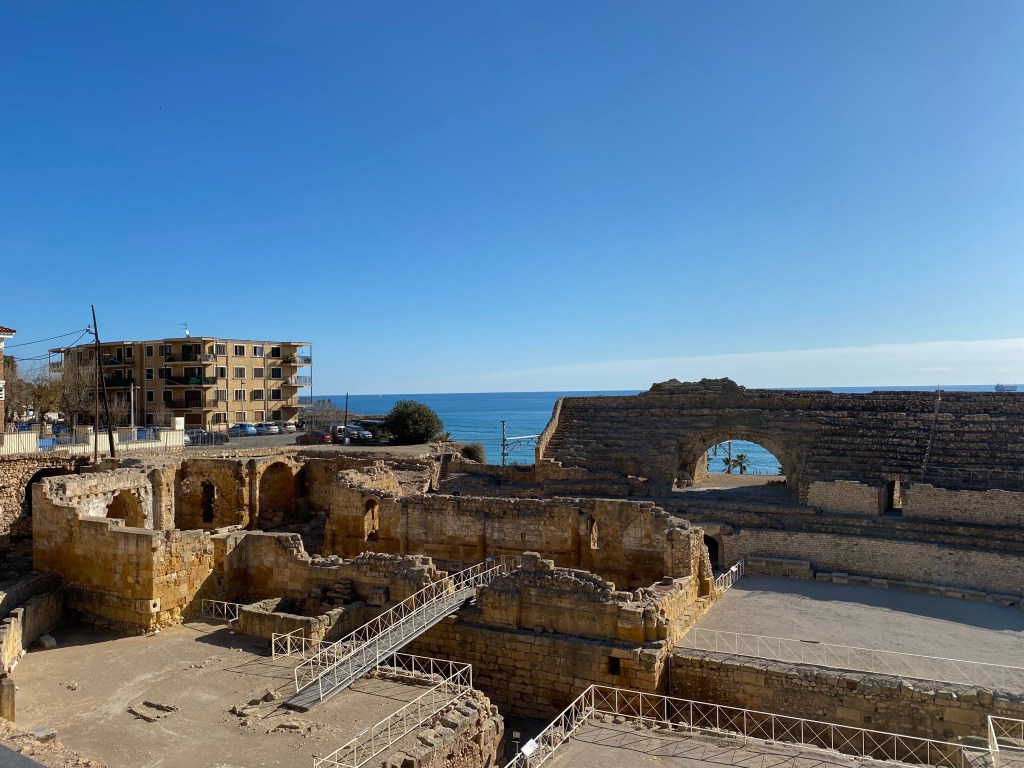
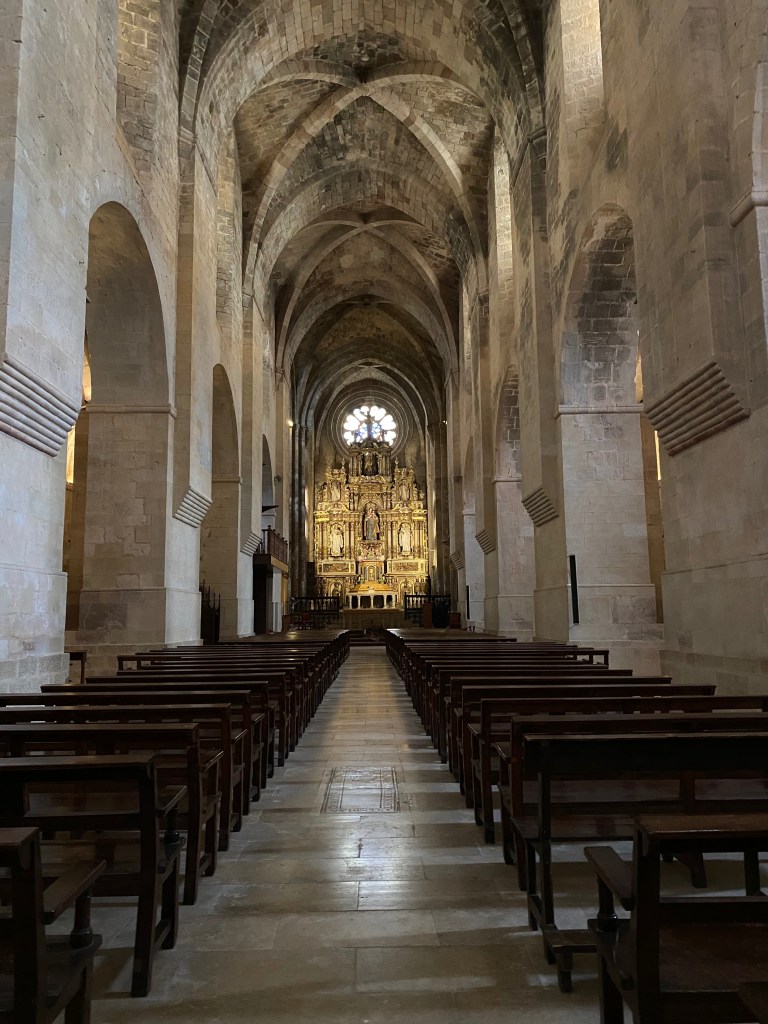
I took five photographs of different Catalan structures with Roman Catalan decorative arts today. These include the famous Spanish church, la Sagrada Familia, a Roman circus in Tarragona, a Roman-Catalan church in Tarragona, and homes from the Roman city of Tarragona.
In addition, in ancient Roman times, a Domus Romana was the type of house occupied by the wealthy, upper classes. Typically within a domus there would be one room called a tablinum used for show and or “bragging rights” to other citizens, and the rest of the house would be completely sealed or hidden. There were usually none or few windows in these homes because it represented the higher class of a domus. Peasants were not privileged enough to see the inside of these households.
Houses today in Catalonia are much more crowded and small than those of Roman Barcino. The city is much larger now which calls for less space making most homes within the city either flats or apartments, but there are still elements of Roman decorative on Catalan buildings. For example, churches, government buildings, the Gothic Quarter, apartments, and hospitals. Two of the most common Roman characteristics found in these Catalan buildings are stain-glass windows, stone-work, and Roman arches.
I think there may be some similarities in American architecture such as the Roman arches and Gothic style. This is very true because America was essentially “conquered” by the Romans or Spaniards. We are a Western Civilization with heavy Western influence. Therefore, most of our architecture is some way linked to old, Roman architecture.
Some parts of the Domus Romana incude the culina, which was a dark, cold, and poorly ventilated kitchen where slaves would prepare meals for the wealthy. The peristylium is a garden within the home open to the sky to recieve light and fresh air. The atrium is the main room where guests were greeted and was the “show room”. Wealthy people were noted for having an atrium with a small pool in it to collect water. Lastly, the triclinium was the dining room which were typically extremely furnished and decorated to impress guests visiting the home. This was often the most impressive and decorated room of the house in order to impress guests that were dining over.
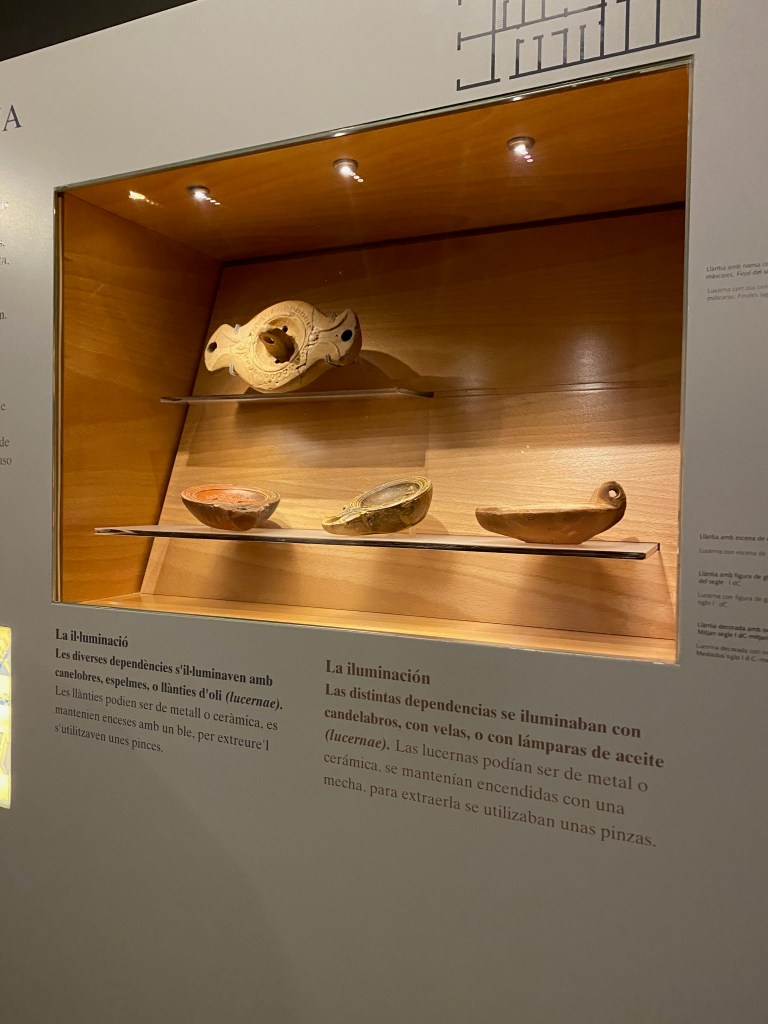
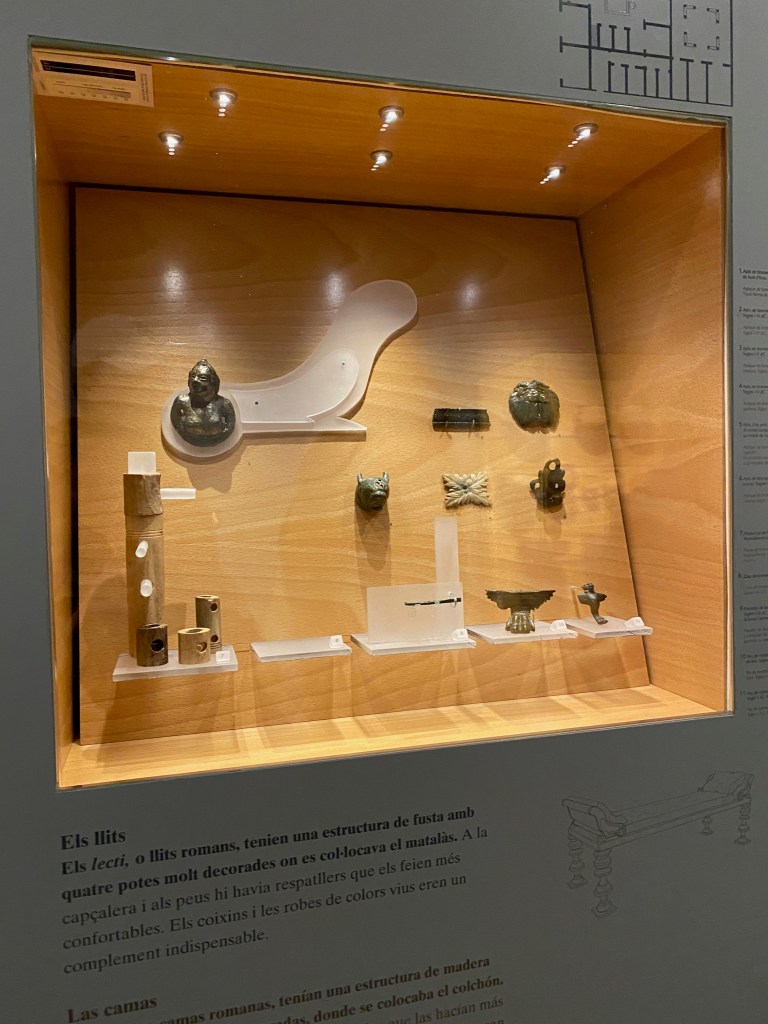
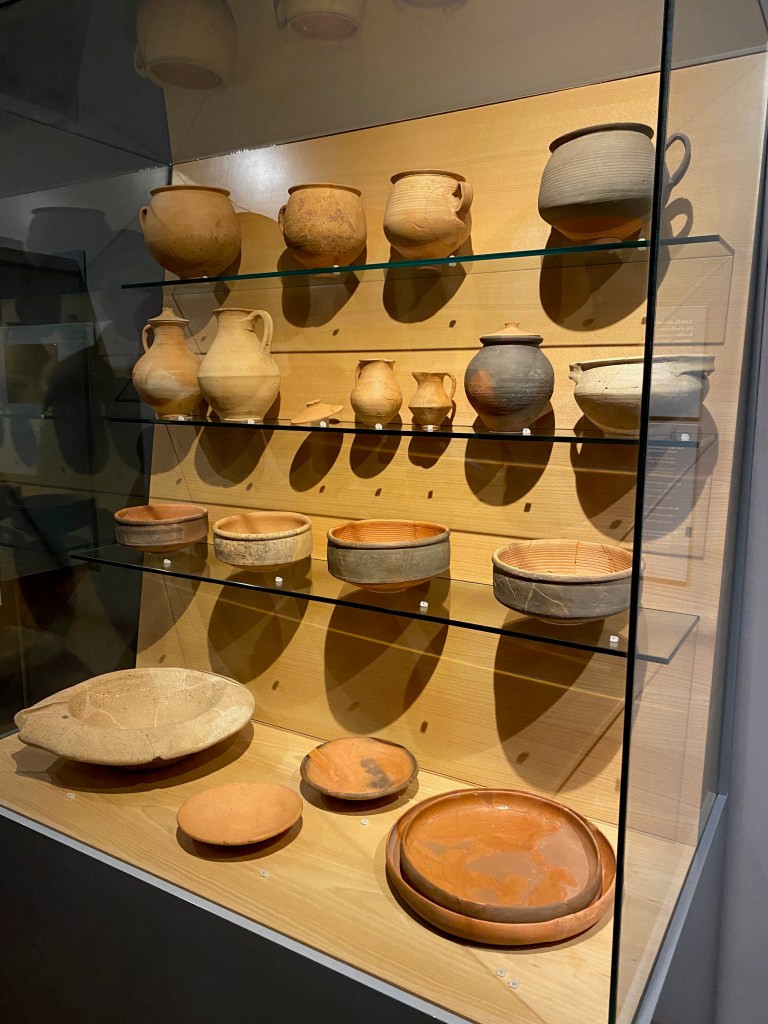
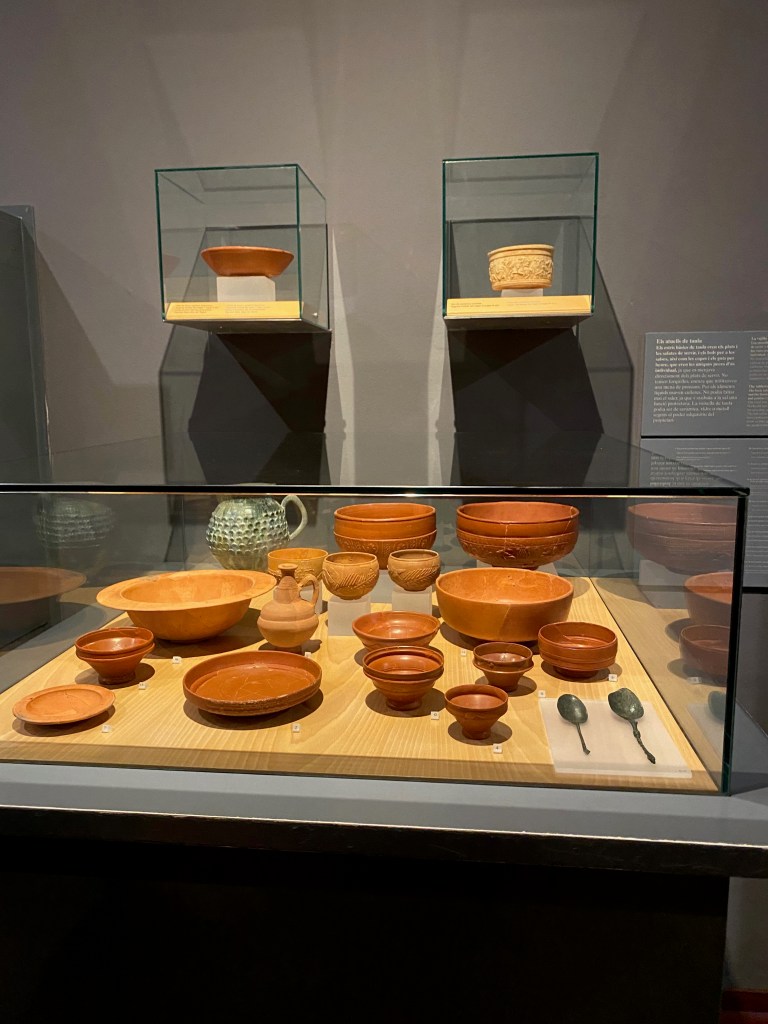
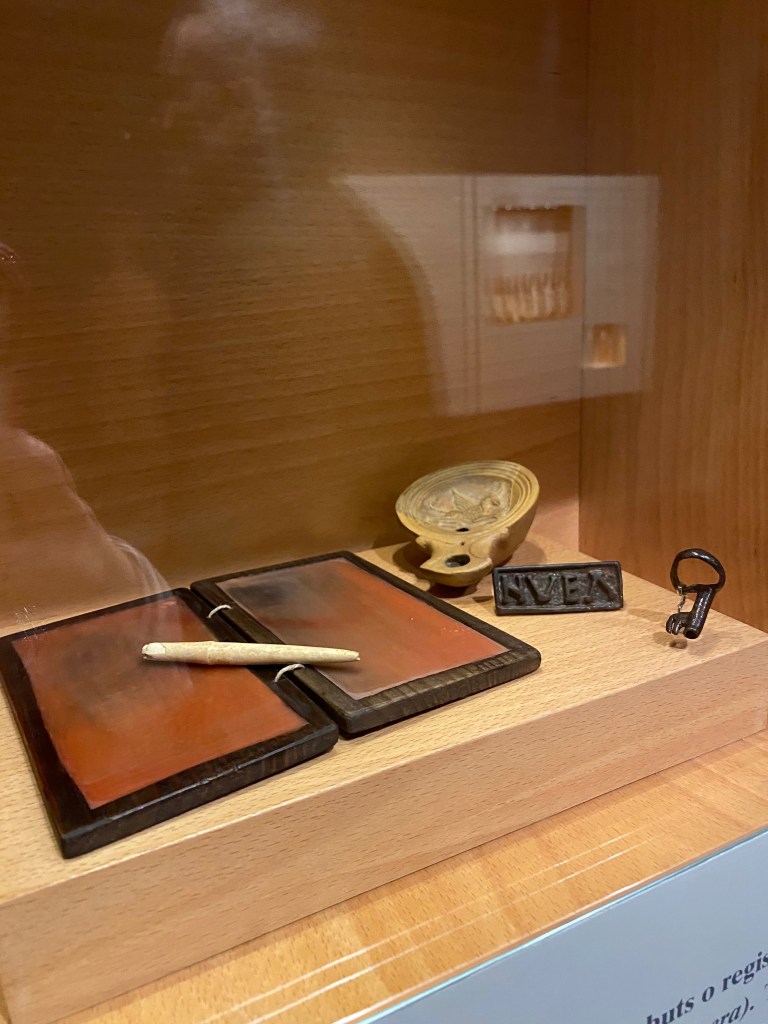
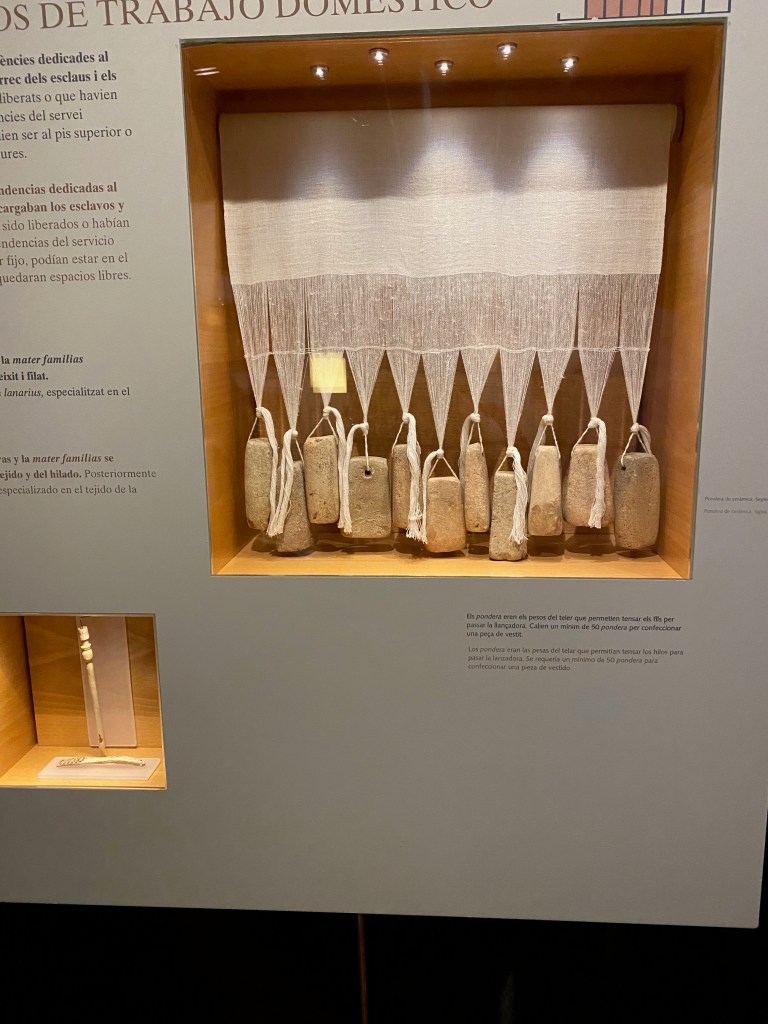
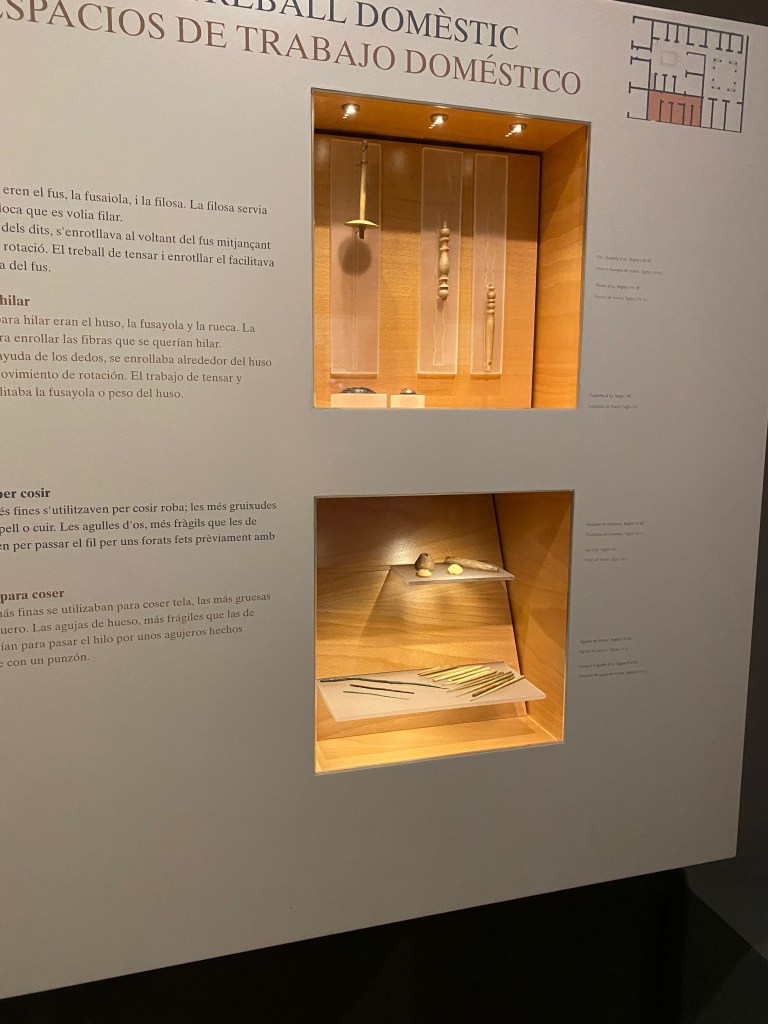
Some artifacts from the Roman times present in the museum are the Roman’s version of a tablet, ivory used to make jewelry, kohl that was used for makeup, bowls made of clay that were used as pots or pans, and drapes. The Romans were very innovative when making tools for themselves. Some antich Roman habits through artifacts were making ceramics, using stone to make tools, and using resources to apply makeup. The antich Roman habit that suprised me the most was the use of chemical ammonia to rid of bacteria and disease on skin and in clothing. Therefore, Romans would often wash clothes in their urine for the ammonia cleaning agent within the urine. This is why Romans often smelled of urine along with the entire city.
In the Domus Romana, the tablinum was a room situated on one side of the atrium and opposite to the entrance of the home. It opened in the rear with a large window or curtain. The walls of the tablinum were decorated with fine arts and were made to be shown off to house guests for high class or status.
A cubicula was a small room occupied by the rich used for a number of different purposes. On the upper story or interior they often functioned as rooms and downstairs by the atrium they would be used for meetings, libraries, or music. There were a few examples of these seen when we saw the remains of a Domus Romana in the museum. Also, there were cubiculas right above the entrance of the museum near the Roman columns when you first entered the exhibit.
I learned Roman wine production was one of the key sources of income at the time and was a booming money-maker. Romans consumed a vast amount of wine everyday. The Romans were big on fermenting wine for sale and trade and drank wine with almost every meal and people of all ages consumed it. In modern day Catalonia, every one consumes wine for the most part. Wine in Spain is super delicious, popular, and inexpensive. I feel as though Catalans consume wine with almost every meal. Wine culture is huge here. Two popular brands of wine in Barcelona are Priorat and Penedès wines. They make all different types of classic white and red wines along with cava.
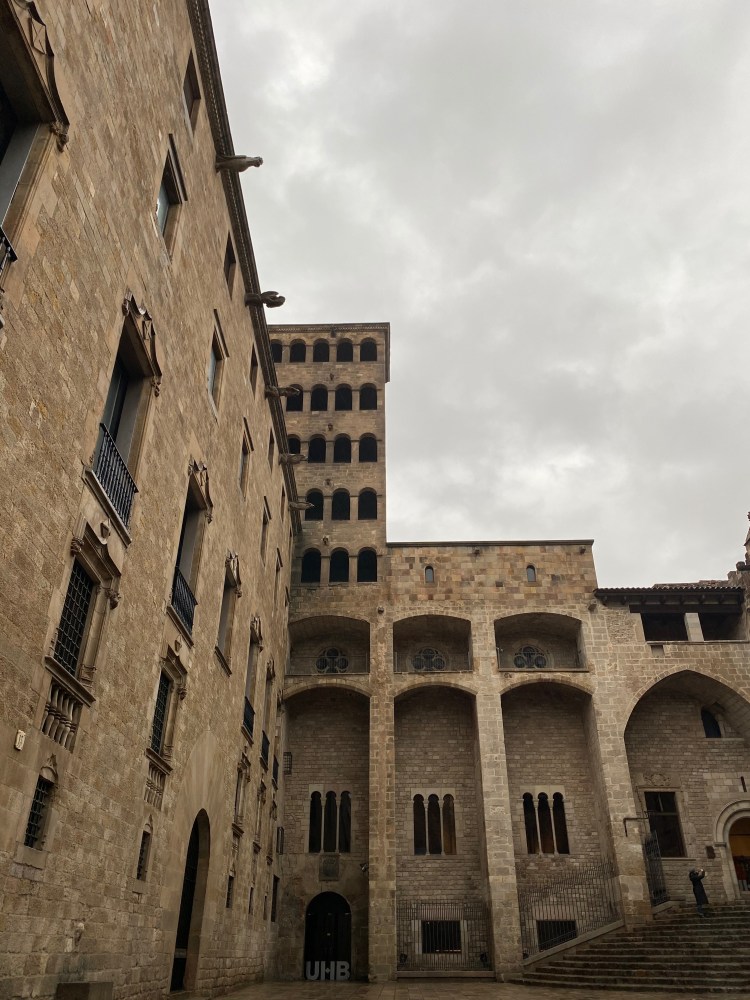
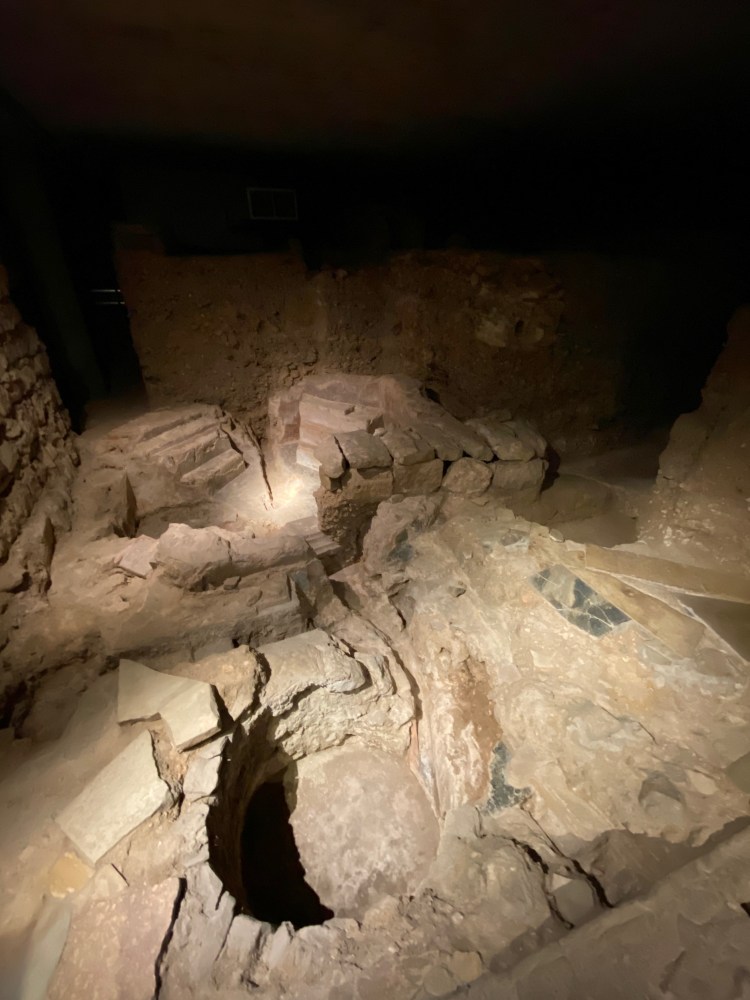
These two photos show the Visigothic influence in Catalunya along with the first Visigothic Baptism pool from 4th century A.D. Once Christianity arrived in Catalunya it dominated the city of Barcino. In no time, all other religions were frowned upon and all Jews were eventually exiled from Spain. In addition, it became the main religion of Catalunya.
 Katie's Barcelona Blog
Fantastic! Thanks for sharing these pictures and all your thoughts on the things you are learning! Keep posting! 💕
LikeLike